Letter Haunted: Why Scrabble Rewires Your Brain to See Words Everywhere, Forever
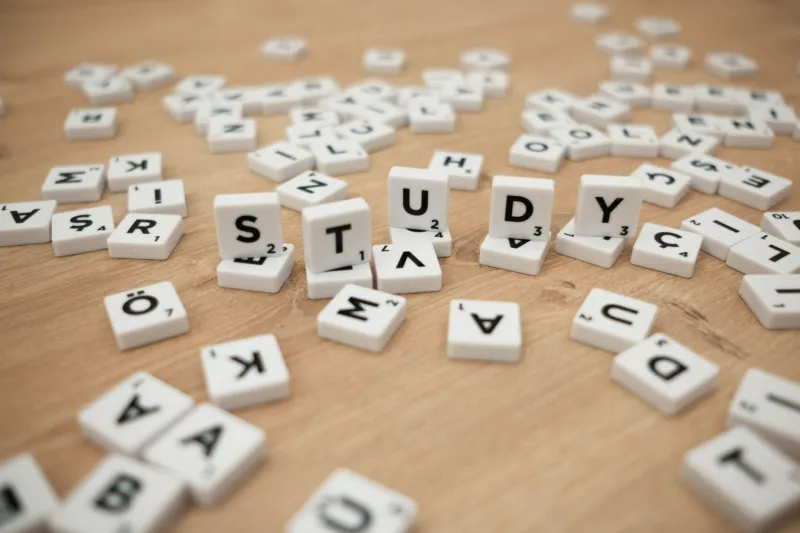
You're standing in the cereal aisle at Target, staring at a box of CHEERIOS, and before you've even reached for it, your brain has already quietly assembled HEROICS from the letters on the box. You didn't ask for that. You didn't try. It just... happened.
Welcome to letter haunting — the unofficial side effect nobody warns you about before you download your first Scrabble app.
For millions of casual players and die-hard tile-shufflers across the US, the game doesn't end when the board clears. It follows them into grocery stores, highway billboards, restaurant menus, and the backs of cereal boxes at 8am on a Tuesday. And the wild part? There's a genuinely fascinating reason your brain does this, and it has everything to do with how word games quietly restructure the way you process language.
The Loop That Won't Quit
Here's what's actually going on up there. When you play Scrabble — or any tile-based word game — you're repeatedly training your brain to perform a very specific cognitive trick: breaking words into their component letters, scrambling them, and hunting for new combinations with high point value. Do that enough times and your brain doesn't just learn the skill. It automates it.
Neuroscientists call this process procedural consolidation — basically, your brain decides a repeated task is important enough to run in the background without your conscious input. It's the same mechanism that lets you drive home from work on autopilot or type without looking at the keyboard. Except in this case, the automated task is relentlessly scanning every string of letters in your visual field for hidden words.
Once that loop is running, it is very hard to switch off.
Cognitive psychologists have a term for the broader phenomenon: involuntary semantic processing. Your brain is wired to find meaning in patterns, and after enough Scrabble sessions, letter combinations become one of the most loaded pattern types it knows. Spot the letters Q, U, I, and T somewhere in a sign? Your brain has already whispered QUIT before your eyes have even finished moving.
Competitive Players Have It Worst — and They Love It
Talk to anyone who plays Scrabble at a competitive level and they'll describe the letter-haunting experience like an old friend they've stopped trying to shake.
Regular tournament players — the folks who memorize two-letter word lists for fun and can tell you that ZAX is a valid play without blinking — report that the mental rearranging becomes essentially constant. Road trips turn into moving word puzzles. License plates are involuntary anagram challenges. Some players describe reading restaurant menus not for the food descriptions, but to see what words are hiding inside the dish names.
One competitive player from the midwest described it like this: "I was at my kid's soccer game and I spent twenty minutes mentally rearranging the letters on the scoreboard sponsor banner. The kids scored twice. I have no idea when."
That's not distraction for its own sake — that's a brain that has been so thoroughly trained in a specific cognitive skill that it applies it automatically, even in completely irrelevant contexts. The game ends. The brain doesn't get the memo.
Why Scrabble Specifically Creates Such a Strong Loop
Not every word game does this with the same intensity. Wordle is compelling, crosswords are addictive, but Scrabble occupies a uniquely brain-sticky territory. Why?
A few reasons.
First, the scoring system creates emotional stakes around specific letter combinations. High-value tiles like Q, Z, X, and J become emotionally charged objects. Your brain doesn't just recognize them — it responds to them. That emotional tagging makes those letters more memorable and more likely to trigger automatic scanning behavior later.
Second, Scrabble is fundamentally a game of constrained creativity. You don't get to choose your letters. You work with what you have, which means your brain practices flexible, lateral thinking with language on every single turn. That flexibility doesn't stay inside the game. It bleeds out.
Third — and this is the sneaky one — the game rewards obscure knowledge. Learning that QOPH is a valid word (it's a Hebrew letter, worth a lot of points, you're welcome) gives your brain a little dopamine hit. And dopamine-linked memories are stickier. Your brain files away weird letter combos with a little star next to them, and then goes hunting for opportunities to use that knowledge in the wild.
The Billboard Test
Here's a quick experiment if you're a regular word game player: next time you're driving or walking past a large sign, notice what your brain does in the first two seconds. Are you reading the message? Or are you already somewhere else — clocking the letter distribution, spotting a hidden word, calculating whether there are enough vowels to work with?
If it's the latter, congratulations. You've been letter haunted.
The billboard test is something a lot of players describe without being prompted. Highway signs are particularly rich territory because they're large, high-contrast, and full of random proper nouns that happen to contain excellent anagram material. DENVER, for instance, rearranges to NERVED. ATLANTA gives you — well, not much, but your brain will try anyway.
Is This Actually Good for You?
Here's where it gets encouraging. The involuntary letter-shuffling that feels mildly unhinged at a soccer game is actually a sign of a brain that has built real, durable cognitive infrastructure.
Research into language processing consistently shows that people who engage regularly with word games demonstrate stronger vocabulary recall, faster lexical access (basically, how quickly you can retrieve a word when you need it), and more robust pattern recognition across multiple domains — not just language. The brain regions activated by tile-rearranging tasks overlap significantly with those used in problem-solving and working memory.
In other words, the letter haunting is a side effect of your brain getting genuinely better at something. The constant background processing isn't wasted compute — it's your mental vocabulary network staying warm and active.
So the next time you catch yourself rearranging the letters in a Starbucks order or silently anagramming a coworker's name badge during a meeting (DANIEL becomes NAILED, just saying), don't fight it. Your brain is doing exactly what it's been trained to do.
The Game Never Really Ends
Scrabble has been around in its current form since the 1940s, and in that time it has cultivated one of the most loyal, slightly-obsessed player communities of any game in American history. There's a reason for that staying power, and it's not just the competitive thrill or the social element of playing with friends.
It's the fact that the game rewires something. It installs a little letter-shuffling engine in your head that keeps running long after the tiles go back in the bag. Players don't just play Scrabble — they start thinking in Scrabble.
And honestly? Once you've spotted HEROICS hiding inside a cereal box before your first cup of coffee, it's hard to argue that's a bad thing.
Your brain found a word. Give it a moment. It's already looking for the next one.