Your Daily Puzzle Habit Is Secretly Upgrading Your Vocabulary While You Sleep
You Thought You Were Just Playing a Game
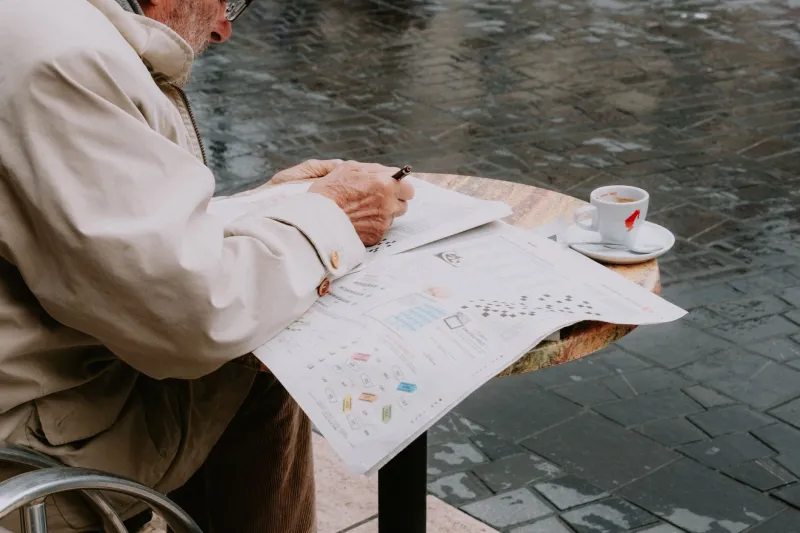
Let's be honest. When you crack open the NYT crossword on your phone at 7 a.m. — still in your pajamas, coffee going cold beside you — you're not thinking about self-improvement. You're thinking about 14-Across and whether "ENNUI" fits. But here's the thing: your brain doesn't care about your intentions. It's upgrading itself anyway.
Cognitive scientists have been quietly building a case over the past decade that regular engagement with word puzzles — crosswords, Wordle, Scrabble, word searches, even those little anagram apps you downloaded and forgot about — produces measurable changes in how people store, retrieve, and actually use vocabulary in everyday conversation. Not just in the moment. Not just while you're playing. Long after you've put the phone down.
The science is genuinely surprising, and it's making a pretty compelling argument that your puzzle habit deserves a little more credit.
What's Actually Happening in There
Here's the short version of what neuroscientists believe is going on: every time you wrestle with a word puzzle, you're not just recalling language — you're exercising the neural pathways that connect meaning, sound, spelling, and context. Think of it like muscle memory, but for your vocabulary.
When you spend three minutes trying to remember a seven-letter word for "melancholy" (it's DOLEFUL, by the way — you're welcome), your brain isn't passively retrieving a file from a cabinet. It's actively reconstructing that word from multiple angles: what it sounds like, how it's spelled, what it means, when you last used it. That multi-angle retrieval process? It strengthens the connection every single time.
Researchers who study what's called "desirable difficulty" — the idea that making your brain work a little harder actually produces stronger memories — have found that word puzzles are almost tailor-made for this effect. The mild frustration of not immediately knowing an answer, followed by the satisfaction of figuring it out, creates a neurological cocktail that makes new words stick far better than simply reading them in a sentence would.
In plain English: struggling with a crossword clue is more valuable than breezing through it.
The Vocabulary Spillover Effect
Here's where it gets really interesting for anyone who's ever been mid-conversation and suddenly found exactly the right word — one they didn't even know they knew.
Regular puzzle players report this happening with surprising frequency. Words encountered in crosswords or Scrabble games have a funny way of showing up later in real speech and writing, often without any conscious effort. Puzzle veterans call it the "spillover" — that moment when EPHEMERAL or LACONIC or SYCOPHANT slides naturally into a work email and you think, wait, where did that come from?
It came from 14-Across, three Tuesdays ago.
This isn't just anecdotal. Studies examining vocabulary breadth in regular puzzle players versus non-players have consistently found that the puzzle group tends to have larger active vocabularies — meaning words they actually use, not just recognize. That distinction matters enormously. Most people recognize far more words than they ever deploy in conversation. Puzzles appear to shrink that gap by repeatedly dragging words out of passive storage and into active use.
Casual Players Are Seeing It Too
You don't have to be a crossword champion or a competitive Scrabble player to feel the effects. Plenty of everyday puzzle fans — the kind who do Wordle every morning and maybe tackle a Wednesday crossword when they're feeling ambitious — describe subtle but real shifts in how they communicate.
Take the growing community of Wordle players who've started noticing they're more deliberate about word choice in general. When you spend days thinking about five-letter words with unusual vowel placements, you start paying closer attention to the architecture of language itself. You notice things. CRANE versus CRANE. Why does STARE feel different from GLARE even when they rhyme? That heightened attention to language structure doesn't clock out when the game ends.
Regular crossword solvers often describe a similar phenomenon — a kind of ambient awareness of words and their relationships that bleeds into daily reading, writing, and conversation. They catch double meanings faster. They notice when a sentence could be worded more precisely. They reach for the specific word rather than settling for the approximate one.
The Communication Upgrade Nobody Talks About
Here's an angle that doesn't get nearly enough attention: word puzzle engagement doesn't just build vocabulary. It trains you to think about how language works, which turns out to be a surprisingly useful skill in the real world.
Crossword clues, for instance, are built on wordplay — puns, double meanings, misdirection. Solving them regularly makes your brain more agile at processing language from multiple angles simultaneously. That same mental flexibility shows up in communication. Puzzle-seasoned brains tend to be quicker at detecting ambiguity, catching miscommunication before it spirals, and finding clearer ways to express complex ideas.
It's not magic. It's just practice. The same way a musician who plays scales daily doesn't think about scales when they're performing — the skill just shows up when needed — a regular puzzle player doesn't consciously think "I will now deploy my crossword vocabulary." The brain just... does it.
So Yes, Your Wordle Streak Is Productive
We know, we know. You've been feeling vaguely guilty about the twelve minutes you spend on word games every morning instead of reading something improving. Here's your permission slip: stop feeling guilty.
Your puzzle habit is doing real cognitive work. It's strengthening memory pathways, expanding your active vocabulary, and training your brain to engage with language more precisely and creatively. These aren't small benefits. In a world where clear communication is genuinely valuable — at work, in relationships, in every text and email and conversation you have — a sharper vocabulary and a more flexible linguistic brain are actual advantages.
And honestly? The fact that it feels like play is kind of the whole point. The low-stakes, low-pressure environment of a word game is exactly what allows your brain to take risks, make mistakes, and learn without the anxiety that tends to block real learning.
Play More. Talk Better. It's That Simple.
The next time someone side-eyes you for spending your lunch break on a crossword, you can tell them — with complete scientific backing — that you're engaged in vocabulary acquisition through desirable-difficulty retrieval practice that produces lasting improvements in linguistic fluency.
Or you could just say you're doing a word puzzle.
Either way, your brain is getting smarter. And your vocabulary is going to show up for you in ways you won't even see coming — right in the middle of some perfectly ordinary Tuesday conversation, when exactly the right word appears out of nowhere.
That's the crossword talking. And it's been preparing that moment for weeks.