Squares, Clues, and Pure Obsession: The Real Reason Crosswords Have a Grip on Your Brain
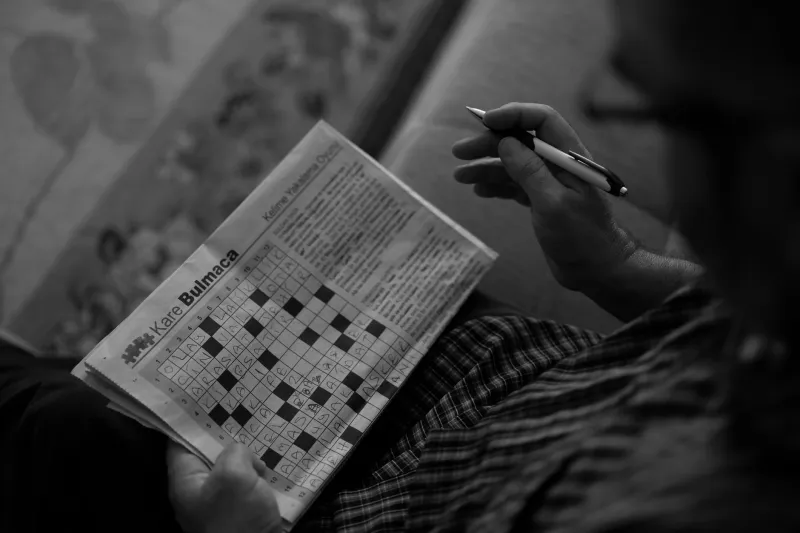
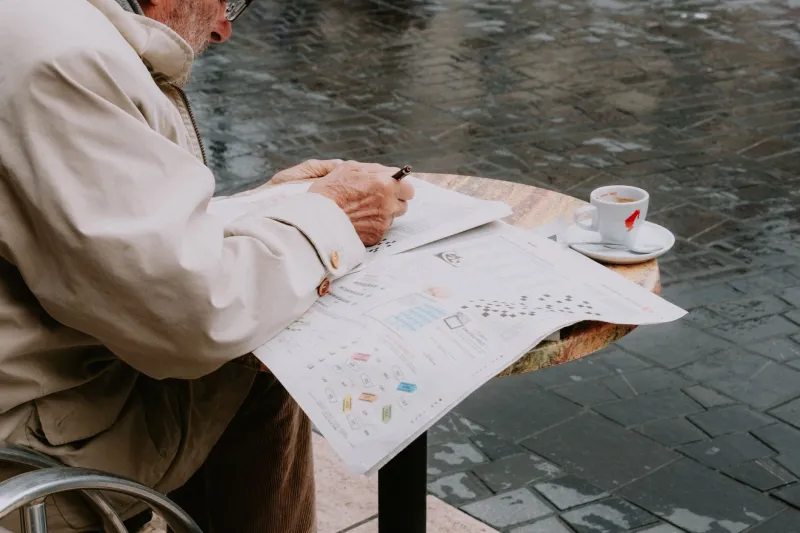
You told yourself just one clue. Maybe two. Then somehow forty-five minutes evaporated and you're still hunched over the Sunday puzzle, muttering a seven-letter word for "Greek wine vessel" under your breath like it's the most important thing you've ever done.
Welcome to the crossword trap — and trust us, you are absolutely not alone in it.
The crossword puzzle has been a fixture of American daily life since the New York World ran the first one in 1913. More than a hundred years later, with mobile games, Wordle clones, and app-based brain teasers competing for every spare second of your attention, the humble crossword grid is still here. Still thriving. Still making grown adults whisper "come ON" at a piece of paper or a glowing screen at 11 p.m.
So what exactly is going on inside your skull when you play? Turns out, quite a lot.
Your Brain Treats Every Clue Like a Mini Mystery
Here's the thing about crossword clues — they're almost never straightforward. "Bird associated with wisdom" sounds simple enough until you realize it might be OWL, but it could also be a four-letter trap leading you somewhere completely different. That ambiguity? Your brain absolutely loves it.
Cognitive psychologists describe this as problem-solving engagement — the mental state where your brain is actively hunting for a solution rather than passively receiving information. When you're working through a clue, your prefrontal cortex (the part handling logic and reasoning) is firing alongside your hippocampus (memory retrieval) and even regions tied to language processing. You're not just thinking. You're running a full diagnostic.
And the moment a word clicks into place? That's not just satisfaction — that's a genuine neurochemical event. Your brain releases dopamine, the same reward chemical associated with eating something delicious or hearing a song you love. Filling in a correct answer literally feels good on a biological level. The puzzle isn't tricking you into enjoying it. It's hacking your reward system fair and square.
The Grid Itself Is Doing Something Clever
There's a reason crosswords use an interlocking grid instead of, say, a simple list of fill-in-the-blank questions. The structure is doing psychological heavy lifting you might not even notice.
When you correctly fill in one answer, those letters become anchors for the crossing words. Suddenly a clue you couldn't crack five minutes ago has two or three letters already sitting there, and your brain — which is an absolute machine at pattern recognition — starts narrowing possibilities at lightning speed. Cognitive scientists call this constraint satisfaction: the more constraints you add to a problem, the faster your brain can zero in on the answer.
This is also why partially completed grids feel so hard to abandon. Every letter you've filled in represents a tiny investment. Leaving the puzzle unfinished means leaving those anchors dangling — and your brain, which is wired to seek closure and completion, finds that genuinely uncomfortable. Psychologists call this the Zeigarnik effect: unfinished tasks occupy mental real estate in a way completed ones simply don't. The crossword knows this. The crossword is using this against you. And you keep coming back anyway.
Difficulty Curves and the "Aha" Moment
If you've ever done a New York Times crossword, you already know the weekly difficulty ramp — Monday is breezy, Saturday is basically a personal attack. That progression isn't arbitrary. It's one of the smartest design features in puzzle history.
Easier early-week puzzles build confidence and momentum. They keep casual players engaged without overwhelming them. As difficulty climbs toward the weekend, the "aha" moments become rarer — but exponentially more satisfying. Solving a clue that stumped you for ten minutes produces a much bigger dopamine response than one you got instantly. The struggle is part of the formula.
Longtime crossword enthusiasts will tell you that Saturday puzzles feel almost personal. The constructors (yes, crossword making is a craft with dedicated professionals behind it) hide wordplay, misdirection, and cultural references inside clues that seem to know exactly which gaps exist in your specific knowledge. Getting one anyway — piecing it together through crossing letters and sheer stubbornness — produces a satisfaction that newer, simpler word games rarely replicate.
Why Newer Games Keep Borrowing From the Crossword Playbook
Wordle took the world by storm in 2022. Connections, Spelling Bee, Strands — each one has carved out a loyal daily audience. But look closely at what makes each of them work, and you'll find crossword DNA woven through all of it.
The shared letter mechanic in Wordle mirrors crossing-word logic. Connections groups words by hidden categories, triggering the same pattern-recognition circuits that crosswords exploit. Spelling Bee's honeycomb structure is essentially a vocabulary challenge built around constraint — only certain letters allowed, just like a grid limits your options.
These games aren't replacing crosswords. They're standing on the crossword's shoulders. The original grid puzzle cracked the code on what makes word games neurologically compelling, and every format that came after has been, in some way, riffing on those same principles.
The Social and Identity Layer
Here's a dimension of crossword obsession that pure neuroscience doesn't fully capture: the culture around it.
In the US, doing the crossword — especially the NYT crossword — carries a certain identity weight. It signals curiosity, vocabulary range, and a willingness to sit with a problem until it yields. Crossword communities online are passionate, nerdy in the best possible way, and surprisingly competitive. Speed-solving has its own competitive circuit. There are crossword tournaments. People have strong opinions about constructors the way others have strong opinions about novelists.
This social layer adds another layer of stickiness. You're not just solving a puzzle — you're participating in something with history, community, and shared language. That sense of belonging amplifies the individual reward loop and turns a solo activity into something that feels, weirdly, collective.
So Why Can't You Stop?
Because your brain doesn't want you to. Every correctly filled square is a small win. Every wrong guess is an itch demanding to be scratched. The grid's structure keeps pulling you forward with partial information, and the difficulty curve keeps the challenge just hard enough to stay interesting without tipping into frustrating.
The crossword puzzle has survived a century of competition because it's not just a game — it's a nearly perfect piece of psychological engineering that happens to also be genuinely fun. It rewards knowledge, rewards persistence, and rewards the specific human joy of making order out of chaos, one letter at a time.
Now if you'll excuse us, we've got a seven-letter Greek wine vessel to track down.