Ink on Paper: How Gen Z Fell Hard for the Handwriting Skill Nobody Taught Them
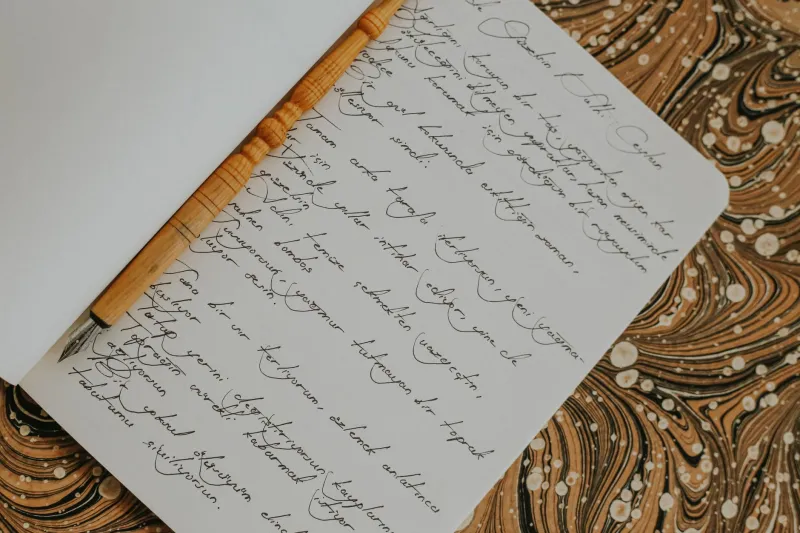
Somewhere between a viral TikTok of a girl carefully looping her letters in a leather-bound journal and a Reddit thread full of twentysomethings asking "how do I even start learning cursive," something quietly shifted. A generation raised on keyboards, touchscreens, and autocorrect is now spending their free time learning to write by hand — and not just print, either. Full, flowing, old-school cursive. The kind your grandma used to write birthday cards in. The kind most of their schools stopped teaching before they ever got the chance.
It's one of the stranger plot twists in recent language history, and honestly? It makes a weird kind of sense.
The Great Cursive Dropout
Let's back up. Cursive didn't just fade out on its own — it got pushed. In the early 2010s, the Common Core State Standards swept through American schools and quietly removed cursive handwriting from the required curriculum. The logic was practical enough: kids were going to live in a digital world, so why spend precious classroom hours drilling loops and ligatures when typing was the real skill they'd need?
So millions of kids born in the late 90s and early 2000s grew up learning to print their names and not much else. Cursive became this slightly mythological thing — something they saw in old letters, on historical documents, in their grandparents' grocery lists. Legible to no one, written by ghosts.
That absence, it turns out, created a kind of hunger.
TikTok Made Them Do It
If you want to understand why cursive is having a moment, start on TikTok. Search #cursive or #handwriting and you'll fall into a genuinely hypnotic rabbit hole: slow-motion videos of pens gliding across paper, satisfying loops forming letter by letter, ASMR-adjacent clips of someone journaling in perfect copperplate script. These videos pull in millions of views. Comments are full of people typing things like "I literally cannot look away" and "okay I need to learn this immediately."
There's something almost meditative about watching good cursive happen in real time. In a feed that usually moves at warp speed — memes, dances, hot takes, chaos — a video of someone writing slowly and beautifully hits different. It's calm. It's tactile, even through a screen. It feels like a skill that belongs to a quieter, more intentional world.
And Gen Z, despite being the generation most associated with digital overstimulation, is increasingly chasing exactly that kind of intentionality.
The Aesthetic Is Real, But So Is the Longing
Yeah, part of this is aesthetic. Let's not pretend otherwise. Cursive looks gorgeous in a journal spread. It photographs beautifully. A handwritten note in flowing script carries a visual weight that a typed message just doesn't. In the era of Pinterest boards and carefully curated Instagram grids, cursive fits right in with the cottagecore, dark academia, and slow-living vibes that have dominated youth aesthetics for the past few years.
But dig a little deeper and something more interesting is happening. A lot of young people talk about handwriting practice the way others talk about meditation or analog hobbies like knitting or film photography. It forces you to slow down. You can't backspace. Every word requires a physical commitment. There's a directness to putting ink on paper that typing — with all its ease and infinite editability — simply doesn't offer.
For a generation that has grown up with the anxiety of everything being permanent online and nothing feeling permanent in real life, there's something grounding about a skill that leaves a physical mark.
Apps, Worksheets, and the New Penmanship Economy
Here's where it gets genuinely funny: Gen Z is learning cursive the most Gen Z way possible — through apps and digital resources. Apps like Cursive Writing Wizard and various handwriting practice tools have seen surging downloads among users who are decidedly not elementary schoolers. Printable cursive worksheets are a surprisingly hot commodity on Etsy. YouTube channels dedicated to teaching copperplate and Spencerian script (the elegant, heavily slanted style popular in 19th-century America) have built real audiences of young followers.
There's also a thriving community of "handwriting improvers" across Reddit and Discord who share practice sheets, critique each other's letterforms, and debate the merits of different pen types with the kind of enthusiasm most people reserve for sports teams. It's nerdy in the best possible way.
The irony of using a smartphone to learn a skill that predates electricity is not lost on anyone involved. But that's kind of the point — these aren't people rejecting technology. They're using it as a gateway to something older and slower.
What This Says About Language in the Digital Age
From a language perspective, the cursive revival is fascinating because it's really about the physicality of writing — something we've almost entirely engineered out of modern communication. When you type, you're selecting characters. When you write in cursive, you're drawing language. The letters connect, flow into each other, take on the particular rhythm of your hand. Your handwriting is yours in a way your font choice never will be.
Handwriting analysts (yes, that's a real field) have long argued that penmanship is a kind of self-expression that reveals things about a person's personality and emotional state. Whether or not you buy that fully, there's something to the idea that writing by hand creates a different relationship between the writer and the words. You feel the sentence forming. You can't skim-type your way through a thought.
For people who spend their days firing off texts, emails, and social media posts at machine-gun pace, the slowness of handwriting isn't a bug. It's the entire point.
The Words Look Different When You Write Them
Here's a little thing worth noting for anyone who loves words and word games: writing a word in cursive makes you see it differently. You notice how letters connect, which combinations flow naturally and which feel awkward under your pen. Long words become almost puzzle-like — a challenge of muscle memory and letter sequencing. Scrabble and crossword fans who've picked up handwriting practice often report that it sharpens their letter awareness in unexpected ways.
There's something about tracing the physical shape of a word that reinforces its spelling in a way that typing simply doesn't. Your hand learns the word, not just your eyes.
Loops, Legacy, and a Little Bit of Rebellion
At the end of the day, Gen Z's cursive obsession is a little bit aesthetic, a little bit anti-digital rebellion, and a whole lot of genuine curiosity about a skill that was quietly taken off the table before they ever got to decide if they wanted it. Schools made the call that cursive wasn't worth their time. Now a generation is reclaiming it on their own terms — through TikTok tutorials, Etsy worksheets, and late-night practice sessions that feel more like art than homework.
Maybe that's the real lesson here. Tell a generation they can't have something, and eventually they'll want it more than anything. Even — especially — if it's just a really pretty way to write the alphabet.