So Close, Yet So Wrong: The Sneaky Brain Glitch That Makes You Pick the Worst Synonym

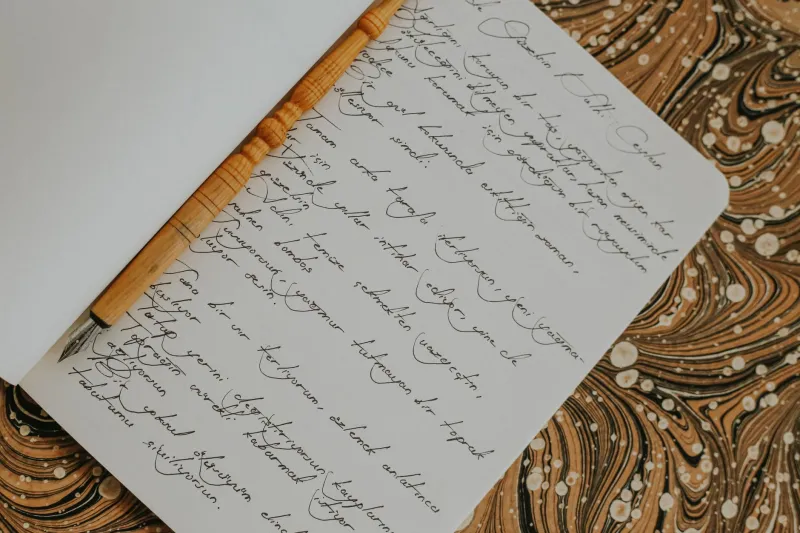
Photo: Ben White, CC0, via Wikimedia Commons
You just fired off an email. It sounded confident, polished, maybe even a little clever. Then someone replies: "Did you mean imply or infer?" And suddenly the whole thing unravels.
Welcome to one of the most underrated traps in the English language — the almost-right word. Not the hilariously wrong word (we've all sent those). The dangerously close one. The synonym that feels correct, reads smoothly, and still manages to quietly stab your meaning in the back.
This isn't a grammar problem. It's a brain problem. And once you understand what's actually happening up there, you'll never unsee it.
Your Brain Is a Pattern Machine (Not a Dictionary)
Here's the thing about how humans retrieve words: we don't scroll through mental definitions like we're searching a database. Instead, the brain pulls words based on association clusters — groups of words linked by sound, context, frequency, and emotional tone.
So when you're reaching for the right word, your brain doesn't always hand you the precise one. It hands you the closest neighbor — the word that lives in the same mental zip code. Linguists call this a semantic paraphasia when it shows up in clinical settings, but in everyday life it just looks like... picking the wrong synonym.
The cruel twist? The more vocabulary you have, the more neighbors there are to choose from. Bigger mental neighborhood, more chances to knock on the wrong door.
The Hall of Almost-Right Shame
Let's talk about some of the most common offenders — words that get swapped so often, entire style guides exist just to beg people to stop.
Enormity vs. Enormousness. This one trips up politicians, journalists, and executives on a daily basis. "The enormity of the achievement" sounds dramatic and weighty — but enormity technically means monstrous wickedness or moral outrageousness. You probably don't want to call your company's quarterly earnings monstrous. You want enormousness. But enormousness sounds clunky, so people keep reaching for enormity and accidentally implying something sinister.
Bemused vs. Amused. These two are roommates in the brain's word-retrieval apartment. Amused means entertained or tickled. Bemused means confused or bewildered. Plenty of published writers have described a character as "bemused by the joke" — which actually means the joke left them baffled, not laughing.
Disinterested vs. Uninterested. A judge should be disinterested — meaning impartial, without a stake in the outcome. Your teenager is uninterested in doing dishes — meaning they just don't care. These two get swapped constantly, and the mixup matters enormously in legal, journalistic, and academic writing.
Peruse vs. Skim. Ask someone to peruse a document and they'll probably give it a quick scan. But peruse actually means to read thoroughly and carefully. The casual usage has gotten so widespread that some dictionaries now list both meanings — which is basically the dictionary throwing up its hands.
Why Smart People Fall for This Hardest
Here's where it gets genuinely interesting. Research in psycholinguistics suggests that confident, fluent language users are more susceptible to synonym substitution errors — not less. Why? Because their brains process language faster, which means they're more likely to grab the first plausible match rather than pausing to verify.
Slower, more deliberate readers and writers — people still consciously building their vocabulary — tend to double-check because they're less certain. Fluent users trust the grab. And sometimes the grab is wrong.
This is sometimes called the fluency illusion: the smoother something feels to produce, the more correct it seems, even when it isn't. Your brain interprets ease of retrieval as accuracy. Which is a neat trick for surviving in the wild, but a real liability when you're trying to write a precise legal brief or a carefully worded apology text.
The Cultural Pressure to Sound Smart (And How It Backfires)
There's also a social layer to this. Americans are conditioned — especially in professional settings — to reach for elevated, sophisticated-sounding language. We want to sound smart. So we swap out simple words for fancier ones, and that's exactly where the synonym trap springs.
Mark Twain allegedly said, "Don't use a five-dollar word when a fifty-cent word will do." Whether or not he actually said it, the point holds. When you stretch toward a more impressive-sounding synonym, you're operating at the edge of your confident vocabulary — and the edge is where the almost-right words live.
This is why business writing is absolutely littered with misused vocabulary. "We want to effect change" (correct) gets swapped for "affect change" (wrong direction). "The data comprises six categories" gets tangled into "is comprised of" (technically backwards). People are reaching for polished, and they're landing on broken.
Catching Yourself Before You Hit Send
Okay, so what do you actually do about this? A few strategies that genuinely work:
Slow down on the words that feel almost too right. If a word drops into your sentence and it just clicks a little too perfectly, that's worth a second look. Smooth retrieval isn't always a good sign.
Look up the word you're confident about. Not the obscure one — you already looked that up. The familiar one. The one you've used a hundred times. Those are the words most likely to be carrying a definition you've quietly misremembered.
Read the sentence without the suspect word. If the meaning of your sentence collapses without it, you're probably using the right word. If the sentence still makes sense with a simpler substitute, consider whether the fancy version is actually doing what you think it is.
Use a thesaurus backwards. Instead of looking up your word to find synonyms, look up the synonym you're considering and check its definition. A lot of misuse gets caught right there.
The Real Game Here
At WordWalla, we spend a lot of time thinking about words — how they work, why they're weird, and what happens when they go sideways. The almost-right word is one of the most fascinating traps in the language because it's not about ignorance. It's about the gap between knowing a word exists and knowing exactly what it does.
The English language has somewhere around 170,000 words in active use. Nobody knows all of them perfectly. The goal isn't perfection — it's catching the moments when your brain's helpful pattern-matching is quietly working against you.
Because the difference between the right word and the almost-right word? According to a quote often (maybe incorrectly) attributed to Mark Twain, it's the difference between lightning and a lightning bug.
And yes, we checked that one. It's probably Twain. Probably.