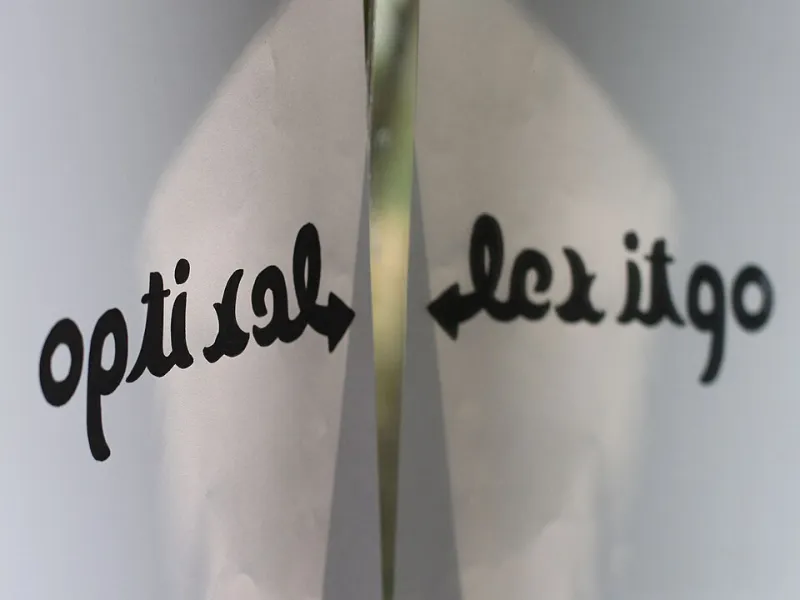
Hidden in Plain Sight: The Secret Anagram Code Hiding Inside Famous Brand Names and Movie Titles
Photo: scrambled letter tiles puzzle word game colorful, via www.camaraprovinciasantodomingo.do
Somewhere in a marketing conference room, years ago, a very clever person looked at a whiteboard full of potential brand names and said: "Wait. Scramble it." And thus, a tradition was born.
Anagrams — words or phrases made by rearranging the letters of another word or phrase — have been a favorite trick of writers, advertisers, puzzle designers, and general mischief-makers for centuries. But in the age of viral content and obsessive internet communities, the anagram has found a whole new life as a kind of cultural Easter egg. A wink from creator to audience. A secret handshake hidden inside a logo.
Once you learn to look for them, they're absolutely everywhere.
First, a Quick Refresher on What Makes an Anagram
An anagram uses every letter from the original word or phrase exactly once, rearranged into something new. Listen becomes silent. Astronomer becomes moon starer. The eyes becomes they see. The letters don't change — only their order does.
The best anagrams feel almost magical, like the hidden meaning was always there, just waiting for someone to rearrange it. That's not an accident. It's a feature of how our brains are wired.
Neuroscientists who study pattern recognition have found that humans are almost compulsively drawn to discovering hidden structure in information. When we find an anagram — especially one that seems meaningful — our brains release a small hit of dopamine. It's the same reward loop that makes crosswords and Wordle so addictive. We are, at our core, pattern-hunting animals. And anagrams are patterns hiding in the most ordinary-looking places.
Famous Real-World Anagrams You'll Never Unsee
Let's get to the good stuff. Here's a curated hit list of anagrams that are lurking inside names you already know:
IKEA → I Ake — okay, that one's a stretch. But the furniture giant's product names are famously drawn from Scandinavian words, and fans have spent years finding hidden meanings inside them. The anagram rabbit hole runs deep.
Vin Diesel → I End Lives — the action star's stage name rearranges into something that would make Dominic Toretto proud.
Clint Eastwood → Old West Action — this one is so perfect it almost feels like it was engineered. Every letter accounted for. Film historians have noted it and marveled.
Snoop Dogg → Dongs Goop — we'll let you sit with that one.
Alec Guinness → Genuine Class — the legendary British actor's name rearranges into perhaps the most fitting celebrity anagram in existence.
George Bush → He Bugs Gore — political anagrams have their own devoted fan community online, and this one has been circulating since the 2000 election.
Madam Curie → Radium Came — science Twitter goes absolutely feral for this one every few months, and rightfully so.
The Morse Code → Here Come Dots — a meta-anagram that describes itself.
Slot Machines → Cash Lost in 'em — possibly the most honest anagram ever assembled.
When Marketers Do It on Purpose
Here's where the story gets genuinely fascinating from a wordplay perspective: some anagrams in brand names aren't happy accidents. They're deliberate.
The classic example is Harpo Productions — Oprah Winfrey's production company. Harpo is Oprah spelled backwards, which is technically a reversal rather than a full anagram, but it opened the floodgates for a whole genre of intentionally scrambled brand identities.
JNCO jeans, beloved by '90s mall kids everywhere, was a deliberate play on the word conj. Streetwear brands have long played games with letter arrangements to create names that feel familiar but slightly off — the uncanny valley of typography.
In the tech world, Acer has been noted as a rearrangement of race, nodding to the brand's competitive ambitions. And countless indie game studios, small businesses, and podcast names are built on anagrams of their founders' names or core concepts — a tradition that goes back to pen names in literature.
Mark Twain was Samuel Clemens. Lewis Carroll was Charles Dodgson. Anagram-adjacent name games have always been a writer's favorite toy.
The Internet Turned Anagram Hunting Into a Sport
If you want to understand how seriously people take this, spend ten minutes on Reddit's r/wordplay or dig into the comments of any post that mentions a celebrity name. Someone will have already run it through an anagram solver. Someone else will have found the most absurd possible result. And a third person will have found the one that's so eerily perfect it gets screenshotted and shared for the next decade.
Anagram generators have been around since the early days of the web, but modern tools have made the process instant and addictive. Type in any phrase and within seconds you'll have hundreds of rearrangements to sift through — some nonsense, some genuinely spooky in their relevance.
The game has also spread into ARG culture (Alternate Reality Games), where puzzle designers hide anagrams inside movie trailers, album artwork, and social media posts as breadcrumbs for obsessive fans. The Dark Knight viral campaign famously used scrambled clues. Dozens of bands have hidden anagrammatic messages in liner notes.
Your Turn: The WordWalla Anagram Hunt
Ready to stretch your brain? Here are five anagram challenges to test your scramble skills. Each of these is a real anagram of a famous name or phrase — see how many you can crack before peeking.
- ADMIRER → unscramble to find a word meaning "wonders at"
- THE CLASSROOM → rearrange to find a phrase about school equipment
- CONVERSATION → scramble into a word about voices
- DEBIT CARD → rearrange into something you do when you're broke
- ELEVEN PLUS TWO → rearrange into a phrase that means the exact same thing
(Answers: 1. ADMIRED, 2. SCHOOL MASTER, 3. CONSERVATION, 4. BAD CREDIT, 5. TWELVE PLUS ONE)
That last one — eleven plus two and twelve plus one — is widely considered one of the most elegant mathematical anagrams ever discovered. Same letters. Same value. Different arrangement. It's the kind of thing that makes you stare at the ceiling for a few minutes thinking about the universe.
Why We Can't Stop Playing This Game
There's something almost philosophical about anagrams. They suggest that meaning isn't fixed — that the same raw material can be rearranged into something entirely different, or something surprisingly similar, depending on how you look at it.
For word game lovers, that's not just a puzzle mechanic. It's a whole worldview.
So next time you see a brand name, a movie title, or even someone's name, give your brain a little workout. Scramble it. Rearrange it. See what's hiding underneath.
The Easter eggs are everywhere. You just have to know how to look.