Mirror, Mirror on the Wall: The Palindrome Craze That's Got Everyone Reading Backwards
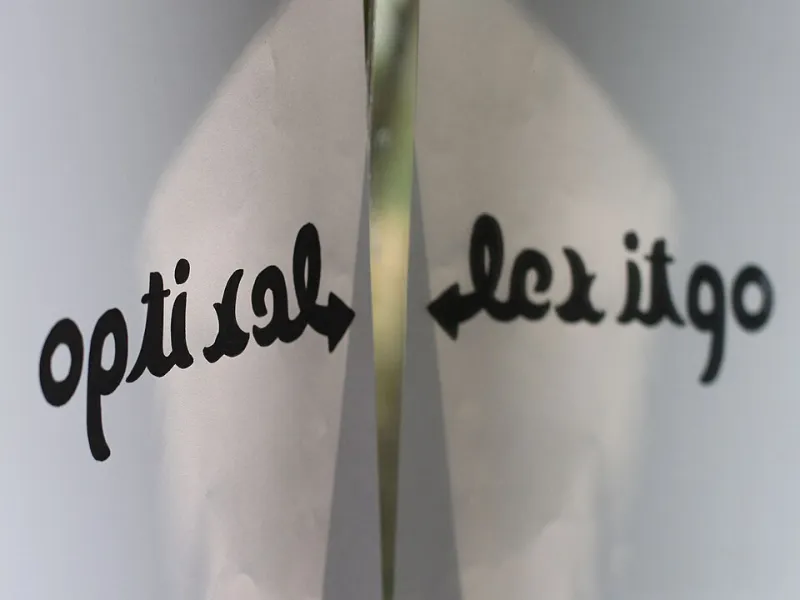
Photo: Basile Morin, CC BY-SA 4.0, via Wikimedia Commons
Somewhere between doom-scrolling and watching cat videos, the internet collectively rediscovered palindromes. Not just the classic racecar or level, but wild, elaborate constructions like "A man, a plan, a canal: Panama" and "Was it a car or a cat I saw?" These things are blowing up on TikTok, Reddit threads, and Twitter/X reply chains — and honestly? We're here for every single backwards letter of it.
But why now? And more importantly, why does your brain basically do a little happy dance when it realizes a phrase reads the same forwards and backwards? Let's dig in.
What Even Is a Palindrome (And Why Should You Care)?
A palindrome is any word, number, phrase, or sequence that reads identically from left to right and right to left. Simple enough, right? Noon. Civic. Kayak. Refer. Those are the entry-level ones — the palindromes you probably learned in third grade and promptly forgot.
But here's where it gets genuinely wild: sentence palindromes. These ignore spaces and punctuation, meaning a phrase like "Never odd or even" is technically a perfect palindrome. So is "Do geese see God?" and "Madam, I'm Adam." The longer and more coherent the sentence, the more your brain absolutely loses it.
That last part is key. Our brains are pattern-recognition machines. They're constantly scanning for symmetry, order, and predictability — because for most of human history, spotting patterns meant survival. A palindrome delivers that hit of pattern recognition in the most satisfying, low-stakes way possible. It's basically a linguistic magic trick, and your dopamine receptors cannot get enough.
The Viral Pipeline: How Palindromes Took Over Your Feed
The recent surge isn't random. A few things collided at once.
First, short-form video made it easy to deliver palindrome reveals with dramatic effect. Someone writes a sentence on screen, reads it aloud, then flips it — and boom, it's the same. The reveal moment is genuinely exciting, even for people who couldn't care less about linguistics on a normal day.
Second, the competitive angle kicked in. Comment sections started filling up with people trying to one-up each other. Someone drops a 10-word palindrome sentence. Someone else fires back with 15 words. Before long, you've got threads with hundreds of people trying to out-palindrome each other, and the whole thing takes on the energy of a friendly rap battle — except with grammar nerds.
Third, and maybe most importantly, palindromes are shareable. They don't require context. They don't lose anything in translation. You can screenshot one and send it to your group chat at 11pm and everyone will immediately get it. That kind of universal accessibility is social media gold.
Reader Challenges: The WordWalla Community Weighs In
We threw out a challenge to our readers: submit your best original palindromes. The results ranged from impressive to hilariously chaotic. Here are a few that genuinely stopped us in our tracks:
- "Step on no pets" — A classic, but submitted by roughly 400 of you, so clearly still a crowd favorite.
- "Borrow or rob?" — Short, punchy, and weirdly philosophical.
- "Too hot to hoot" — This one has a very specific energy and we respect it.
- "No lemon, no melon" — Grocery store drama, palindrome style.
- "Yo, banana boy" — We don't know who banana boy is, but we support him.
The lesson here? The best palindromes have some kind of internal logic or humor. They feel like they mean something, even if the meaning is completely absurd.
How to Build Your Own Palindrome (Without Losing Your Mind)
Okay, here's the part you actually came for. Crafting a palindrome from scratch is equal parts puzzle and creative writing exercise — and it's way more doable than it looks. Follow these steps and you might just cook up something worth posting.
Step 1: Start with a mirror word. Pick a word that's already a palindrome, or a word that has a useful reverse. For example, "noon" is already mirrored. But "live" reversed is "evil" — which is a fantastic building block because both words carry meaning.
Step 2: Build outward symmetrically. Whatever you add to the left side of your phrase, you need the reverse on the right. Think of it like a word sandwich: the bread has to match. If you add "Do" to the front, you need "od" (or something that ends in those letters) on the back.
Step 3: Use palindrome-friendly letters. Certain letters are your best friends here: vowels (especially a, e, o), and consonants like n, r, s, t, and m that appear in tons of common words. Letters like q, z, and x are basically palindrome kryptonite.
Step 4: Cheat a little (everyone does). Punctuation and spaces don't count in most palindrome conventions. So "Madam, I'm Adam" works even though it has a comma and an apostrophe. Use this to your advantage. Contractions, commas, and hyphens are your loopholes.
Step 5: Read it out loud. Seriously. If it sounds natural when spoken, it's going to land better when shared. The goal is for someone to read it, think it's a normal sentence, and then do a double-take when they realize it works backwards too. That moment of surprise is the whole game.
The Longer the Better? Not Exactly.
There's a temptation to go big — to try building a 50-word palindrome sentence just to flex. And look, we respect the ambition. But some of the most viral palindromes are short and punchy. "Racecar" is still iconic. "Noon" is elegant in its simplicity.
The sweet spot tends to be somewhere in the 4-to-8-word range for sentence palindromes. Long enough to feel impressive, short enough that someone can hold the whole thing in their head and verify it in real time. If a reader has to pull out a notepad to check your work, you've probably gone too far.
Go Ahead, Give It a Shot
Here's your WordWalla challenge for the week: craft an original palindrome and drop it in our community forum. Bonus points if it's actually funny, makes some kind of sense, or involves food (the internet loves food content, and palindromes are no exception).
The palindrome craze isn't slowing down anytime soon. And honestly, in a world full of complicated, divisive content, there's something genuinely refreshing about a sentence that just... works perfectly in both directions. Your brain deserves that little win today.
Now go forth and read backwards.