Accidentally Obsessed: How Daily Word Puzzles Quietly Rewired the Way America Talks
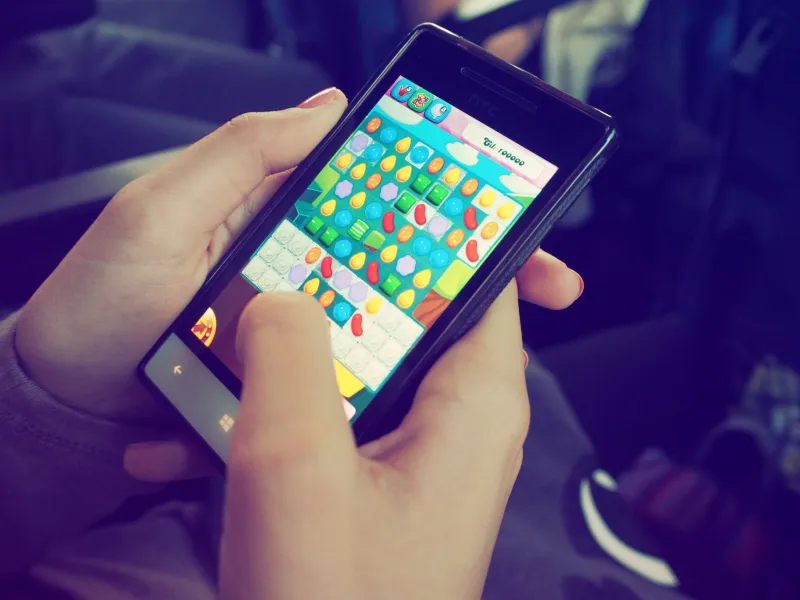
Somewhere between your first cup of coffee and your second scroll through your phone, something snuck up on you. You started noticing words differently. A billboard catches your eye not because of the product, but because the tagline has a weird double consonant cluster. Your coworker says "tacit" in a meeting and you think, five letters, T-A-C-I-T, solid Wordle word. You are, whether you signed up for it or not, a word nerd now.
Welcome to the club. It's enormous.
The Puzzle That Opened the Floodgates
It didn't happen overnight, but it did happen fast. When a simple browser-based word game exploded across social media in late 2021, it dragged along a demographic that had never once voluntarily cracked open a crossword: regular people. Office workers, teenagers, retirees, people who openly claimed to "hate English class" were suddenly sharing green-and-yellow grids like proud kindergartners showing off finger paintings.
The game's genius was its simplicity. Five letters. Six guesses. One shot per day. That daily constraint — the fact that you couldn't binge it — made it feel more like a ritual than a habit. And rituals, as any behavioral psychologist will tell you, stick.
But here's the part nobody really planned for: the ritual started leaking out of the game and into everyday life.
Your Brain on Word Games
Dr. Anne Charity Hudley, a linguist and professor at the University of California Santa Barbara, has spent years studying how language exposure shapes perception. She's not surprised that daily puzzle habits bleed into real-world language awareness. "When you train your brain to look for patterns in a structured, rewarding context, it doesn't clock out when the game ends," she explained in an interview with a language research podcast last year. "You've essentially given your brain a new lens."
That lens shows up in strange, delightful ways. Puzzle regulars report scanning license plates for vowel patterns. They catch themselves mentally rearranging letters in restaurant names. Some describe a new sensitivity to word choice in news headlines, almost like a low-level editorial radar that didn't exist before.
For word game designers, this is the dream scenario. "The best puzzle experiences create what we call 'transfer,'" says Marcus Levin, an independent game designer based in Austin who has built several browser word games. "The player takes the cognitive skill out of the game and applies it somewhere else. That's when you know you've built something that actually matters."
Vocabulary Creep Is Real, and It's Spreading
Here's where it gets genuinely interesting. Puzzle habits don't just change how people see words — they change which words people actually use.
Take the word "tacit." Or "staid." Or "ergot." These aren't exactly dinner-table vocabulary for most Americans. But they've become familiar to anyone who's been stumped by a five-letter answer on a Tuesday morning. And familiarity, linguists will tell you, is the first step toward adoption.
Social media has turbocharged this process. When a tricky game answer goes viral — when thousands of people are simultaneously groaning about the same obscure word — that word gets embedded in cultural memory in a way that no vocabulary workbook could ever manage. It's learning through shared suffering, which, it turns out, is incredibly effective.
Online forums dedicated to word games are full of players casually dropping game-adjacent vocabulary into conversation. "That's such a good Wordle word" has become its own compliment, a shorthand for elegant, useful, underappreciated.
Ads, Billboards, and the Newly Critical Eye
Marketing professionals have started noticing something peculiar: audiences are more attuned to wordplay than they were five years ago. Puns that would have slid past people unnoticed are now getting dissected online. Clever brand names earn genuine appreciation. Clunky slogans get roasted.
"There's a higher baseline of word awareness in the general public right now," says one New York-based copywriter who asked to remain anonymous because, as she put it, "my agency doesn't know I spend 20 minutes on puzzles before every morning standup." She's noticed that focus groups respond more enthusiastically to wordplay-driven concepts than they did even three years ago. "People get it faster. They're primed for it."
This isn't just anecdotal. Google Trends data shows sustained search interest in vocabulary tools, word etymology sites, and linguistics explainers — categories that spiked alongside the word game boom and haven't fully settled back down.
The Reluctant Word Nerds
Not everyone is thrilled about their new linguistic hyper-awareness. There's a whole subset of puzzle players who describe the experience with mild exasperation — they got hooked, they can't stop, and now they can't turn off the part of their brain that clocks every interesting word choice in a Netflix subtitle.
"I genuinely did not ask for this," one Reddit user wrote in a thread about puzzle side effects. "I used to just watch TV. Now I'm pausing to think about why the writers chose 'sullen' instead of 'moody.' I have a problem."
It's a relatable problem. And honestly, a pretty good one to have.
Language as a Living Game
What the daily puzzle phenomenon has done, more than anything, is make language feel playful to people who never thought of it that way. For a lot of Americans, English class was a chore — grammar rules, essay formats, red-pen corrections. Word games reframed the whole thing. Suddenly vocabulary isn't a test you fail; it's a puzzle you solve. Spelling isn't a judgment; it's a strategy.
That reframe matters. A lot.
When people enjoy engaging with language, they engage with it more. They read differently. They write with more intention. They notice the craft in a well-turned phrase. They start, almost without realizing it, to care about words in a way that feels chosen rather than assigned.
So yeah — if you've caught yourself mentally filing away an unusual word because it might come in handy some Tuesday morning, you're not alone. Millions of Americans are right there with you, accidentally fluent in the language of language itself.
And honestly? That's kind of beautiful.