Your Phone Knows What You Mean Before You Do: The AI Autocorrect Revolution Rewriting Human Language
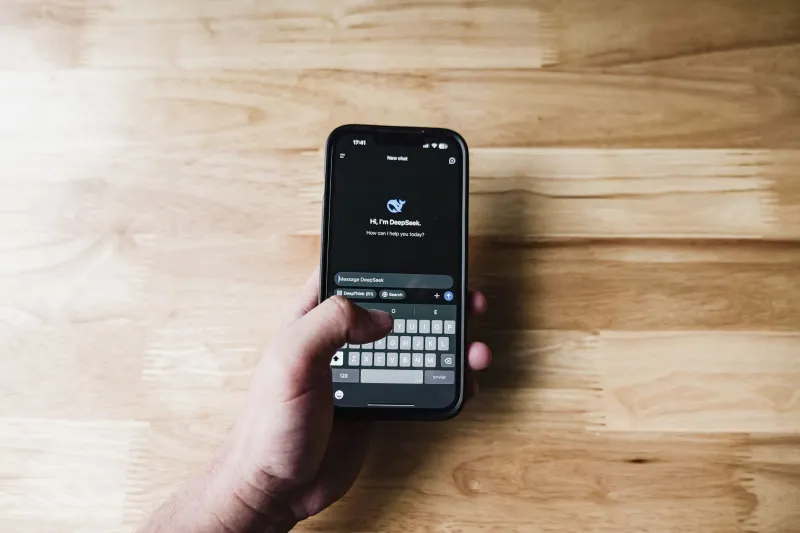
Remember the golden age of autocorrect fails? The screenshots. The group chats erupting in chaos because someone's phone decided "I'll be there in a sex" was a perfectly reasonable thing to send to their mom. Those were simpler times.
But something has quietly shifted. The autocorrect on your phone today is not the same blunt instrument it was five years ago. It's not just scanning a dictionary and making a best guess anymore. It's watching you. Learning you. And in some genuinely wild ways, it's starting to understand you better than your own fingers do.
From Spell-Check to Mind-Reader
Old-school autocorrect worked on a pretty basic principle: if what you typed looked close enough to a real word, it swapped it out. No context, no nuance, no mercy. That's how "I'm on my way" became "I'm on my waffle" and stayed that way until someone invented the long-press undo.
Modern AI autocorrect—think the predictive systems baked into iOS, Android's Gboard, and third-party keyboards—operates on an entirely different level. These systems use large language models trained on billions of sentences to understand not just what word you typed, but what word you meant given everything around it. They factor in sentence structure, conversational tone, your personal typing history, and even the app you're using. Texting your college roommate reads differently than drafting an email to your boss, and your phone is starting to know the difference.
Dr. Lauren Squires, a linguist who studies digital communication, puts it plainly: "These systems aren't just correcting errors anymore. They're making interpretive decisions about meaning. That's a fundamentally different kind of intervention in human language."
The Personal Dictionary Problem
Here's where it gets genuinely fascinating—and a little existential. Many AI keyboard systems now build what engineers call a "personal language model" based on your individual typing patterns. The more you type, the more the system calibrates to your specific vocabulary, your abbreviations, your favorite filler words, and even your emotional register.
Type "lmaooo" enough times and your phone stops questioning it. Use "per my last email" sarcastically in enough work messages and the system starts predicting it in professional contexts. Your phone is essentially writing a biography of your communication style one keystroke at a time.
For word nerds, this raises a delicious question: at what point does the AI stop correcting you and start being you?
Language researcher and author Gretchen McCulloch, who has written extensively about internet communication, has noted that people develop genuinely distinct digital voices—specific patterns of punctuation, capitalization, and phrasing that signal personality and mood. The creepy-impressive part is that AI systems are now sophisticated enough to learn and replicate those patterns, not just accommodate them.
Are We Forgetting How to Spell?
Okay, here's the part that makes English teachers nervous. If your phone is always going to catch your typos, fix your grammar, and smooth out your sentence structure, does it matter whether you ever internalized those rules yourself?
The honest answer is: it's complicated, and experts genuinely disagree.
On one side, you have researchers like Dr. Michaela Cullington, who have studied how digital writing tools affect students' baseline literacy skills. The concern is straightforward: skills you don't practice, you lose. If autocorrect handles spelling for you from age ten onward, you may never build the neural pathways that make spelling intuitive. It's the same argument people make about calculators and mental math.
On the other side, some linguists argue that this framing is a little old-fashioned. "Spelling has never been a stable, sacred thing," says Dr. Squires. "English spelling is notoriously inconsistent—it reflects centuries of linguistic accidents, not logical rules. The idea that perfect spelling equals intelligence or literacy is a pretty recent cultural invention."
There's also the question of what we mean by "writing skills" in the first place. Constructing a compelling argument, choosing vivid words, structuring a narrative—none of that is what autocorrect does. It fixes surface errors. The deeper craft of writing remains stubbornly human.
The Vocabulary Wildcard
One underrated effect of predictive AI text is what it does to word choice. When your keyboard is constantly surfacing the most statistically likely next word, there's a gravitational pull toward the average. The safe word. The expected phrase.
This is the autocorrect equivalent of eating at chain restaurants every day—technically fine, nutritionally adequate, but not exactly adventurous. Language researchers have started to wonder whether heavy reliance on predictive text nudges people toward blander, more homogenized writing over time.
For the WordWalla crowd, this is practically a call to arms. The whole point of playing with language—finding the unexpected word, the sideways metaphor, the pun that makes someone groan and grin simultaneously—is that it resists the average. It delights in the surprising choice. AI autocorrect, at least in its current form, is not great at surprising you. It's optimized for the predictable.
That said, newer generative AI tools integrated into writing apps are starting to offer suggestions that feel less algorithmic and more creative. Whether that's genuinely helpful or just a different kind of linguistic training wheels is a debate worth having.
What the Word Gamers Know
Here's a fun wrinkle that the Wordle-and-crossword crowd already understands intuitively: actively playing with language keeps your brain sharp in ways that passive autocorrect reliance simply doesn't. When you're hunting for a five-letter word with two vowels and no repeated letters, you're exercising the exact mental muscles that autocorrect is quietly letting atrophy.
Word puzzle enthusiasts tend to have larger active vocabularies, stronger pattern recognition, and better recall of uncommon words—precisely because they engage with language as a system rather than just a communication tool. The AI can't do that for you. It can fix your typo, but it can't feel the satisfaction of landing on "SQUIB" in the final Wordle row.
The Bottom Line
AI autocorrect is genuinely remarkable technology, and pretending otherwise would be silly. It saves time, reduces friction, and makes written communication more accessible for people who struggle with spelling due to dyslexia or other learning differences. Those are real, meaningful benefits.
But it's worth staying conscious about the trade-off. The more we outsource the mechanical work of language to machines, the more intentional we probably need to be about engaging with language for its own sake—playing with it, wrestling with it, enjoying it.
Your phone might know what you mean before you finish typing. But it still has absolutely no idea why you love the word "serendipity," or what it feels like to finally nail the spelling of "Mediterranean" without looking it up.
That part's still yours.